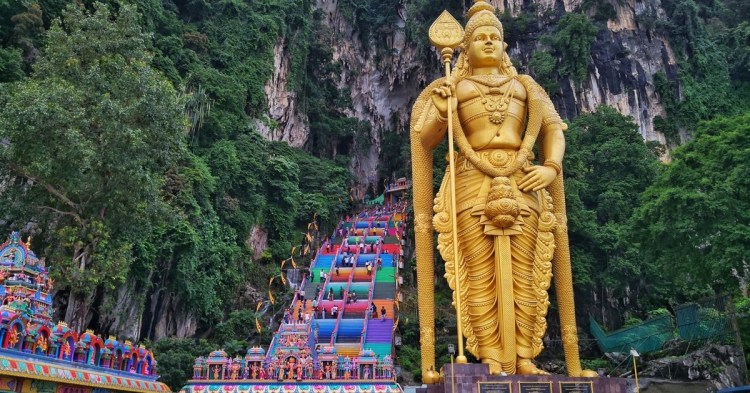
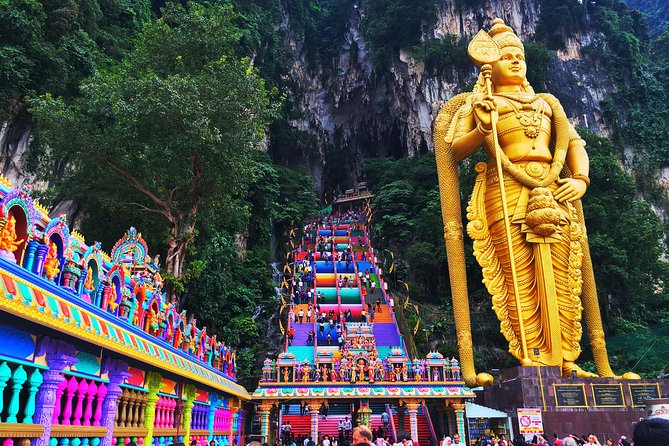
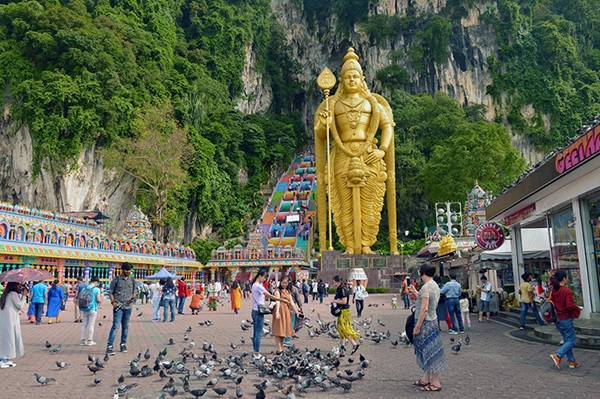
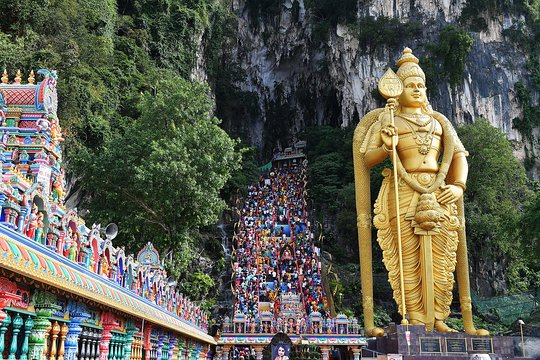
The limestone forming Batu Caves is said to be around 400 million years old. Some of the cave entrances were used as shelters by the aboriginal Temuan / Besisi people (a tribe of Orang Asli). As early as 1860, Chinese settlers began excavating guano for fertilising their vegetable patches. However, they became famous only after the limestone hills were recorded by colonial authorities including Daly and Syers as well as American Naturalist, William Hornaday in 1878.
Batu Caves was promoted as a place of worship by K. Thamboosamy Pillai, an Indian trader. He was inspired by the ‘vel’-shaped entrance of the main cave and was inspired to dedicate a temple to Lord Muruga within the caves. In temples dedicated to Lord Murugan, Vel, a divine javelin (spear), is an object of worship.
The history of Batu Caves started in 1891 when Mr. K. Thamboosamy Pillai, who also founded the Sri Maha Mariamman Temple Dhevasthanam, Kuala Lumpur, sent his very close associates, Sri Thiruvengadam Pillai and Sri Kanthapa Thevar to survey for an ideal and suitable place of worship for Lord Sri Murugan.
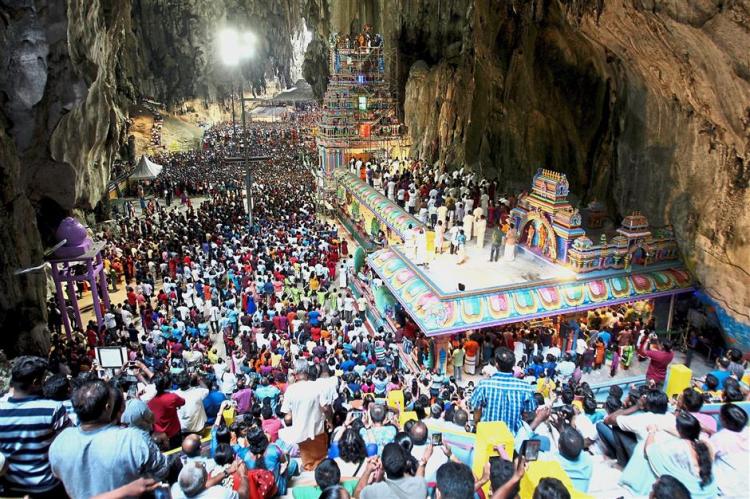
It was in that year, that the influential descendant of Indian immigrants from Tamil Nadu, India, Mr. K. Thamboosamy Pillai installed the ‘murti’ or consecrated idol of Sri Subramaniar Swamy (Lord Murugan) in the 400-ft. high Temple Cave. From 1892 onwards, the Thaipusam festival in the Tamil month of Thai (which falls in late January/early February) has been celebrated there as the annual festival of Batu Caves. Wooden steps up to the Temple Cave were built in 1920 and have since been replaced by 272 concrete steps.
Location Address: Gombak, 68100 Batu Caves, Selangor
 Historical Sites in Malaysia